


Advice · Hard Floor Cleaning
Why does your tiled floor still look dirty after mopping?
5 min read
On This Page
The numbers looked impressive.
Earlier this year, Sky News investigated a music-streaming trick: upload AI-generated tracks, then use bots to play them repeatedly and generate royalties.
Plenty of plays. But those plays didn’t mean real people were enjoying the music.
It’s easy to judge something by how much activity we can see.
At home, you might mop the kitchen floor several times a week. You put in the effort, empty the dirty water and wait for it to dry.
Then the grout still looks dark. The tiles still look dull.
How often you mop doesn’t tell you whether you’re removing what’s making the floor look dirty.
There may be ingrained soil, cleaning residue or discoloured grout. There could also be wear or damage that cleaning won’t correct.
Before reaching for a stronger product, find out which problem you’re dealing with.
Is it the tiles, the grout or both?
Look at the floor once it’s dry.
Is the whole surface dull? Are there greasy-looking areas near the cooker? Does the dirt seem concentrated around entrances or along the grout lines?
Those differences matter.
Textured tiles and grout can hold dirt and grease that routine mopping doesn’t fully remove. A streaky or sticky surface may need a different investigation, particularly if the problem appeared after you changed cleaning products.
A dull tile surface and dark grout lines don’t necessarily have the same cause.
At Wink’s, my hard floor cleaning service is designed to tackle ingrained soiling. But first, we need to consider the floor’s material and condition.
If you contact me, keep the name of your current cleaning product handy, along with its dilution instructions. Tell me where the problem shows most.
That gives us a better starting point than guessing from the floor’s colour alone.
Could your mopping routine be leaving something behind?
When a floor looks grubby, adding more cleaner feels like a reasonable next step.
But extra product doesn’t necessarily mean extra cleaning power. Some treatments need their residue removed afterwards, and using the wrong dilution can affect the result.
Before buying another bottle, check the basics:
- Remove loose grit and debris before wet cleaning.
- Make sure the cleaner is suitable for the flooring.
- Measure the dilution according to the instructions.
- Use a clean mop and change dirty water.
- Follow any directions about rinsing.
Check that the advice you’re following applies to your actual floor, too.
A stone-effect finish could be porcelain, natural stone or vinyl. Similar appearances can hide very different care requirements.
For example, Karndean recommends a pH-neutral cleaner approved for vinyl for routine cleaning.
Why should you be careful with natural stone?
A bottle labelled “tile cleaner” isn’t automatically suitable for every tiled floor.
Limestone and marble are sensitive to acids. LTP’s natural stone guidance specifically advises against acid-based cleaners on these materials.
That matters if you’re considering vinegar, a limescale remover or a product intended to remove grout residue.
Check suitability before applying it, especially if you’re unsure what the floor is made from.
Look for installation records or ask the supplier. Photographs can help with an initial enquiry, but they aren’t always enough to identify a material confidently.
A stubborn mark is frustrating. Damaging the surface while trying to remove it gives you another problem to solve.
Can professional cleaning improve dark grout?
It may improve grout affected by accumulated dirt and grease.
At Wink’s, I offer tile and grout cleaning as part of my hard floor service, with grout sealing available afterwards where appropriate.
The condition of the grout matters as well as its appearance.
If it’s cracked, loose or missing, mention that when you enquire. Removing soiling won’t repair those defects.
Also tell me what result you want. Are you hoping to remove dirt, or do you want the grout to be a different colour?
Those are different requests, and it helps to make the expectation clear before discussing treatment.
Will the floor look new afterwards?
That depends on what’s making it look tired.
Cleaning may improve a floor affected by ingrained soiling. Wear and existing damage may remain even after the dirt has been removed.
Before booking, ask what process is proposed, what it includes and which improvements are realistically achievable.
If sealing is recommended, ask why it suits your floor and what ongoing care it will need.
You should understand what you’re paying for and what the result is likely to be.
Still mopping without seeing an improvement?
You don’t need to keep trying stronger products to find out whether professional cleaning could help.
Tiled kitchens and hallways usually sit next to carpeted rooms. Alongside hard floors, we offer carpet cleaning in Cannock, carpet cleaning in Stone and upholstery cleaning in Rugeley, so the whole house can be done in one visit.
I’m Jack, owner of Wink’s Carpet & Upholstery Cleaning in Stafford.
Call me on 01785 596060, or visit our hard floor cleaning page.
Send a photograph of the whole floor and close-ups of the tiles and grout. Tell me:
- What the floor is made from, if you know.
- Which product you currently use.
- Which areas are bothering you.
- Whether you’ve noticed streaks, stickiness or damaged grout.
We can discuss what may be causing the problem and whether professional cleaning is worthwhile before you spend money on another treatment.
Need Advice About Your Tiled Floor?
Send Jack a photo of the whole floor plus close-ups of the tiles and grout. Discuss what may be causing the problem before you buy another product.
Learn more about our hard floor cleaning service. We also clean in Stafford.
Related Articles
Case Study · 29 April 2025
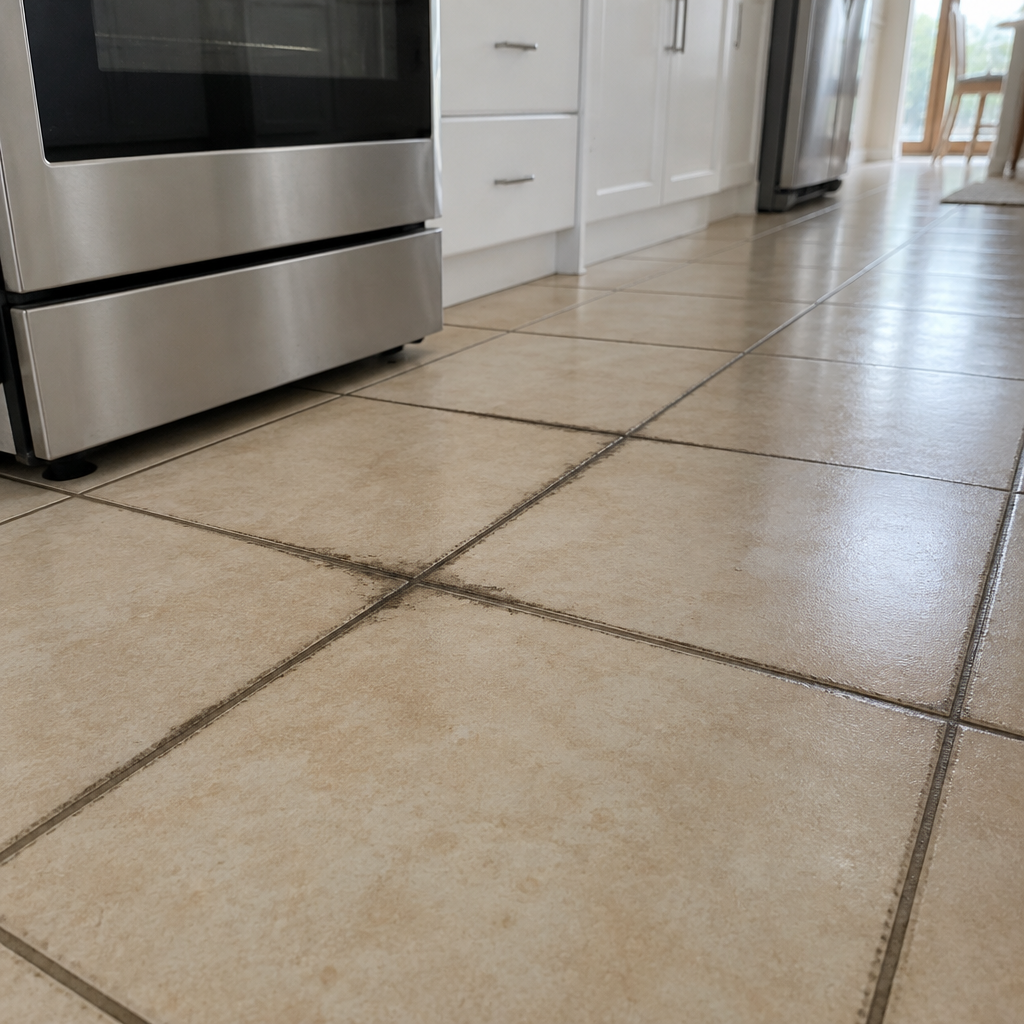
Cleaning Dark Grout Lines in a Burntwood Kitchen
The tiles seem fine and you mop regularly, but the grout lines look dark. This Burntwood example looks at whether the grout needs replacing or a more thorough clean.
Advice · 3 September 2024
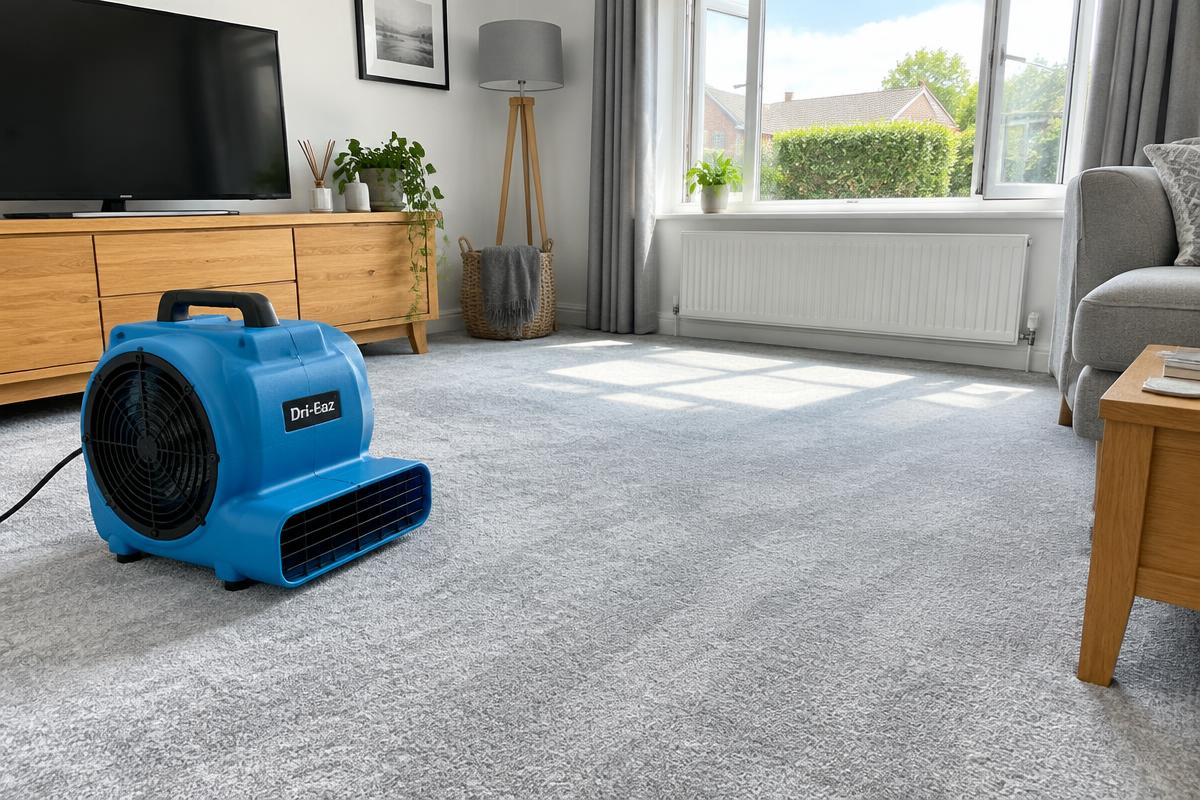
How long do carpets take to dry after professional cleaning?
The National Carpet Cleaners Association gives a general drying guide of two to eight hours, depending on the cleaning method, carpet and ventilation. Here is what affects drying times and how to plan around them.